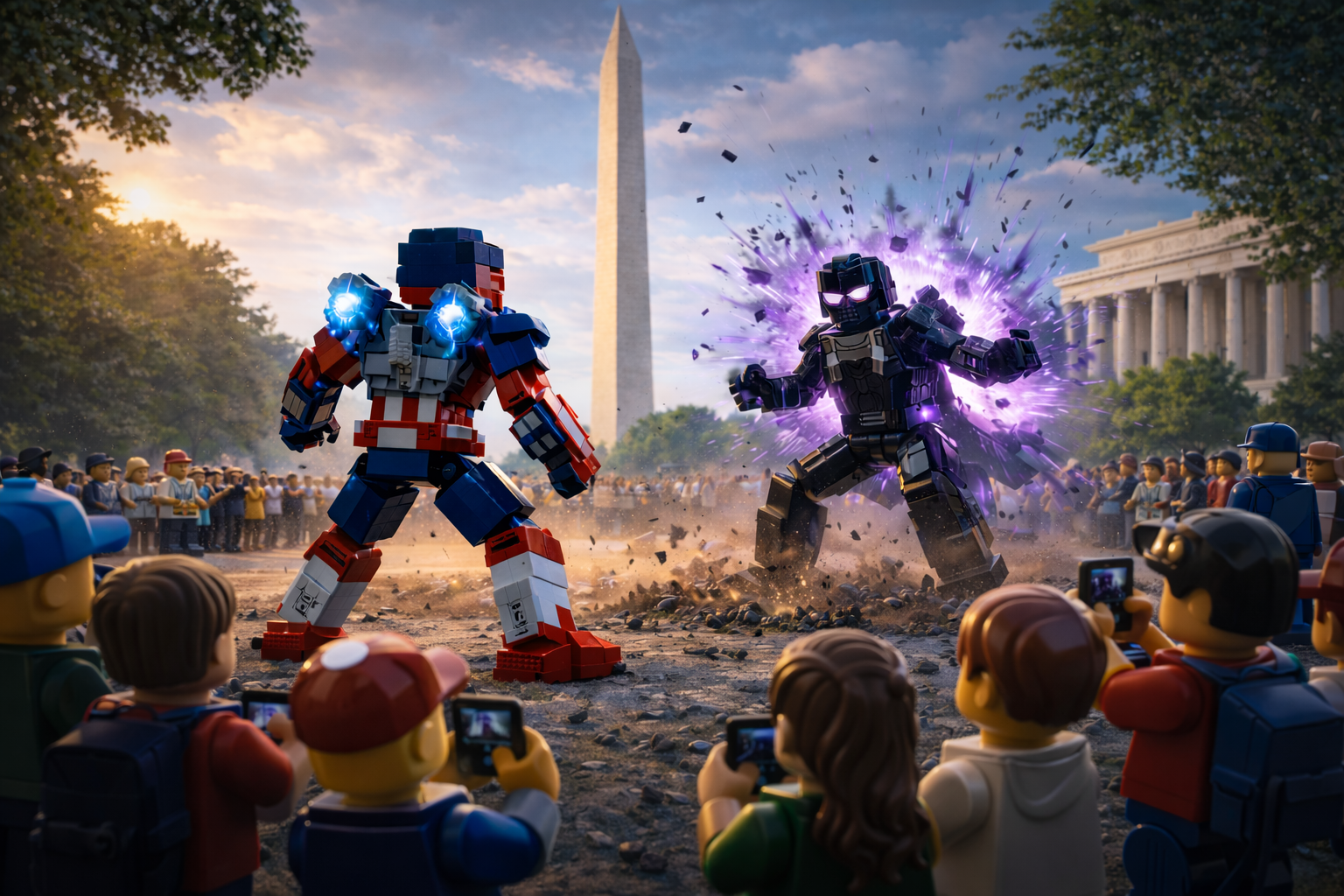
The afternoon was ordinary until it wasn’t.
Tourists drifted across the grass between the Reflecting Pool and the memorial steps, phones raised, voices overlapping in a dozen languages. School groups clustered around chaperones. Food trucks hummed at the curb. The Monument stood clean and white against a pale sky, unmoved by any of it.
We were there together—three of us—because that’s how you do D.C. on a weekend. You walk until your feet complain, then you sit where history feels close enough to listen. We had just sat down when the wind changed.
It wasn’t strong. Just wrong.
A ripple ran across the pool, thin and sharp, like someone had dragged a finger across glass. Conversations stuttered. Heads turned. The Monument didn’t move—but the air around it did, bending, pressing, as if the city had inhaled and forgotten to breathe out.
At first, people thought it was a demonstration. Someone shouted about a parade permit. Someone else laughed. The laughter didn’t last.
A figure rose into view near the base of the Monument—not climbing, not flying exactly, but lifting as if the ground had decided to let go. The figure was tall, built broad and steady, colors bright enough to cut through the afternoon glare. When they landed, the sound traveled through the stone beneath our feet.
A man near us lowered his camera. “Is this… a show?”
No one answered.
Across the lawn, something answered instead.
It came from the direction of the memorial—dark against the pale steps, moving too smoothly, like it had learned the shortcuts between moments. Where the first figure stood open and unmistakable, this one kept its shape tight, edges pulled in, as if it preferred the shadows even in full daylight.
The crowd did what crowds do when certainty disappears. It leaned back. Phones went up. A line of space opened without anyone agreeing to open it.
We stood, suddenly aware of how small we were between stone and sky.
The two figures faced each other with the Monument behind one and the memorial behind the other, as if the city had staged this on purpose. A voice carried across the grass—low, distorted, not quite human, not quite amplified. We couldn’t make out the words, only the tone: accusation sharpened into promise.
The bright figure didn’t answer right away.
When they did, it wasn’t loud. It didn’t need to be.
The first strike didn’t hit a person. It hit the ground.
Stone fractured with a sound like thunder held too long. The shockwave rolled outward, knocking people back a step, then another. Someone screamed. Someone dropped a phone that skittered across the pavement and didn’t stop until it met the curb.
We moved together without planning it, pulling back toward the trees, toward anything that felt less open. A family ducked behind a low wall. A ranger shouted directions that tangled with sirens starting up from everywhere at once.
The bright figure moved fast—faster than our eyes wanted to believe—meeting the dark one in a clash that rang against the Monument like a bell. The air flashed. Light bent. For a second, the world looked like it had been folded and unfolded wrong.
They weren’t fighting wildly. That was the strange part. Each movement was measured, deliberate, like a debate written in force instead of words. When the bright figure blocked, it was with the whole body turned into a promise kept. When the dark one struck, it was with precision, looking for gaps no one else could see.
We realized then that this wasn’t new to them.
This was a continuation.
A blow glanced off stone and carved a scar into the steps of the memorial. Gasps rippled through the crowd—not just fear now, but offense. This place mattered. These stones held names and ideas and weight.
The bright figure noticed the damage and shifted instantly, drawing the fight away, planting themselves between the dark one and the memorial as if the boundary had always been there. The message landed without words.
The dark figure laughed. The sound crawled.
“You think that’s what they need?” the voice said, clearer now, carrying easily. “A wall?”
The bright figure advanced instead of answering.
We felt it then—not hope exactly, but recognition. The kind you get when you see someone step into a space that shouldn’t belong to anyone and claim it anyway, not for themselves, but for everyone else.
The fight moved fast across the lawn, away from the densest parts of the crowd. Trees shuddered as if bracing. The Monument watched, unchanged, the city’s long memory refusing to blink.
Sirens closed in. Drones buzzed overhead. Orders crackled from radios. None of it slowed what was happening.
A strike sent the bright figure skidding across the grass, tearing a line through green and earth. The dark figure followed, pressing the advantage, shadows stretching too far for the angle of the sun.
We held our breath together.
The bright figure rose.
Not immediately. Not effortlessly.
They pushed up, one knee, then two feet, shoulders squared. There was a pause—a human pause—and then they were moving again, faster, stronger, like the hit had clarified something instead of taking it away.
They met in the open, light and shadow colliding so close we felt the heat of it. The sound wasn’t loud this time. It was focused, compressed into a single moment that seemed to narrow the world down to two figures and a decision.
The dark figure faltered.
Just for a heartbeat.
That was enough.
The bright figure drove forward, forcing space, forcing distance, steering the fight toward the edge of the grounds where the city opened into streets and choices multiplied. The crowd surged with them, not following, but believing.
At the far edge of the lawn, the dark figure broke away, retreating into the grid of the city where buildings rose and sightlines vanished. The bright figure stopped at the boundary and didn’t chase—not yet.
They turned back toward us.
Toward the Monument. Toward the memorial. Toward a crowd that had fallen silent without noticing.
For a moment, the distance between us felt enormous.
Then the bright figure nodded—once—and stepped after the shadows, disappearing into the city where the next move would be made out of sight.
The sirens arrived all at once.
We stood there, together, staring at stone that had watched it all, wondering how close we’d come to something breaking—and how close we’d come to something holding.
This is an original work of fiction created by Brick Crossing, inspired by the design themes of LEGO® set 76296.
LEGO® is a trademark of the LEGO Group, which does not sponsor, authorize, or endorse Brick Crossing.